POCUS Governance: Training, Documentation and Quality Assurance
Founder & Clinical Director, Ultrascan Technologies
March 19, 2026 - 10 min read
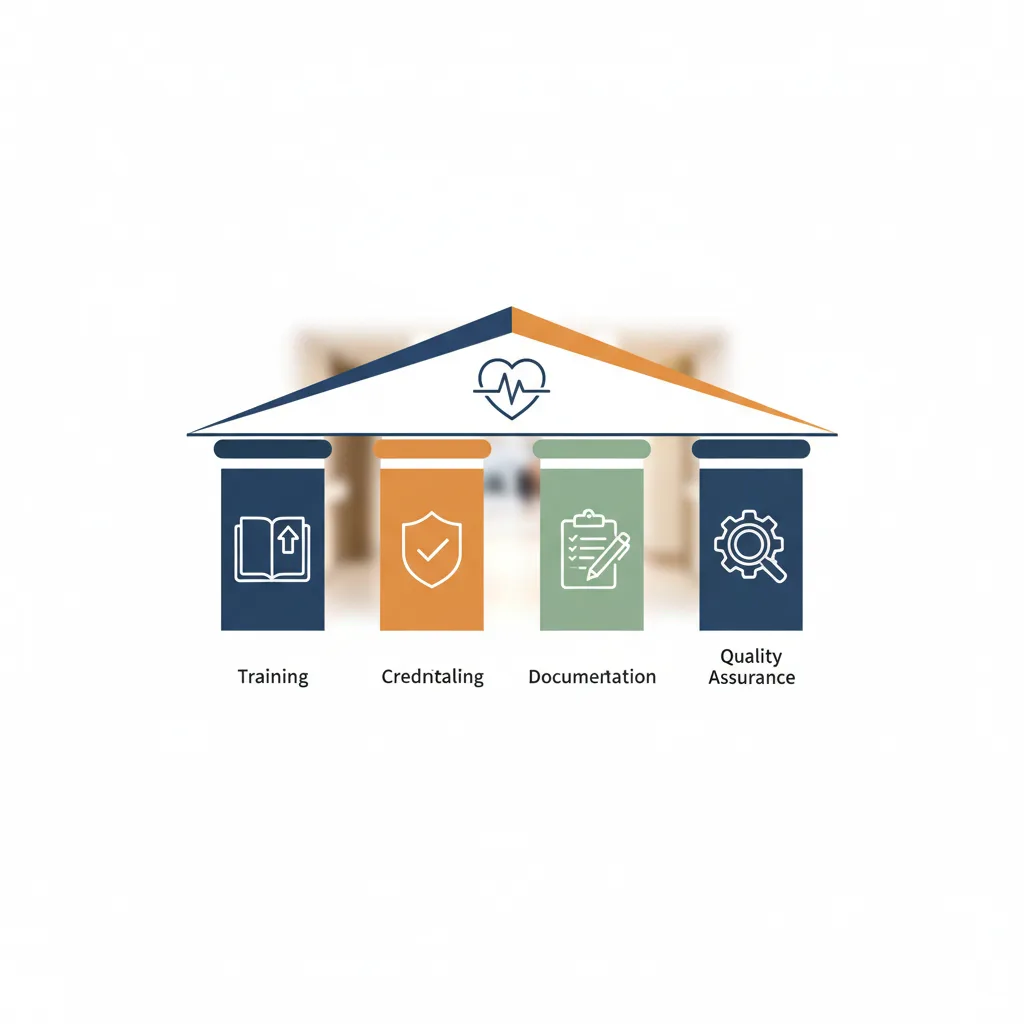
A POCUS device is not a programme. Acquiring a wireless probe without establishing a governance framework around its use creates clinical risk rather than reducing it. Poorly performed or misinterpreted bedside ultrasound can be more dangerous than no imaging at all, because it provides false confidence in an incorrect diagnosis. Building a sustainable POCUS capability requires attention to training, credentialing, documentation, quality review, and medico-legal protection.
This article outlines the key components of a POCUS governance framework applicable to South African practitioners, from solo general practitioners to department-level programmes in academic hospitals.
Why Governance Matters
In South Africa, the medicolegal environment for healthcare practitioners has become significantly more active over the past decade. The number of malpractice claims against both public and private sector practitioners has increased, and the quantum of damages awarded has risen substantially. POCUS performed without adequate training, outside defined scope of practice, or without appropriate documentation creates liability exposure that structured governance significantly reduces.
Beyond liability, governance frameworks serve a clinical quality purpose. Structured training ensures that practitioners scanning patients have reached a defined competence threshold. Quality review processes identify systematic errors in image acquisition or interpretation before they produce patient harm. Credentialing provides institutional assurance that POCUS is being performed by practitioners who have demonstrated capability.
Training Requirements
EMSSA ePOCUS Programme
The Emergency Medicine Society of South Africa (EMSSA) has developed the ePOCUS credentialing framework, which represents the most structured POCUS training pathway available to South African clinicians. The programme uses a tiered structure:
- Level 1: Focused assessment (FAST, limited cardiac, lung) for emergency and acute care practitioners
- Level 2: Extended POCUS applications including obstetric, procedural guidance, and soft tissue assessment
- Level 3: Advanced applications and teaching capability
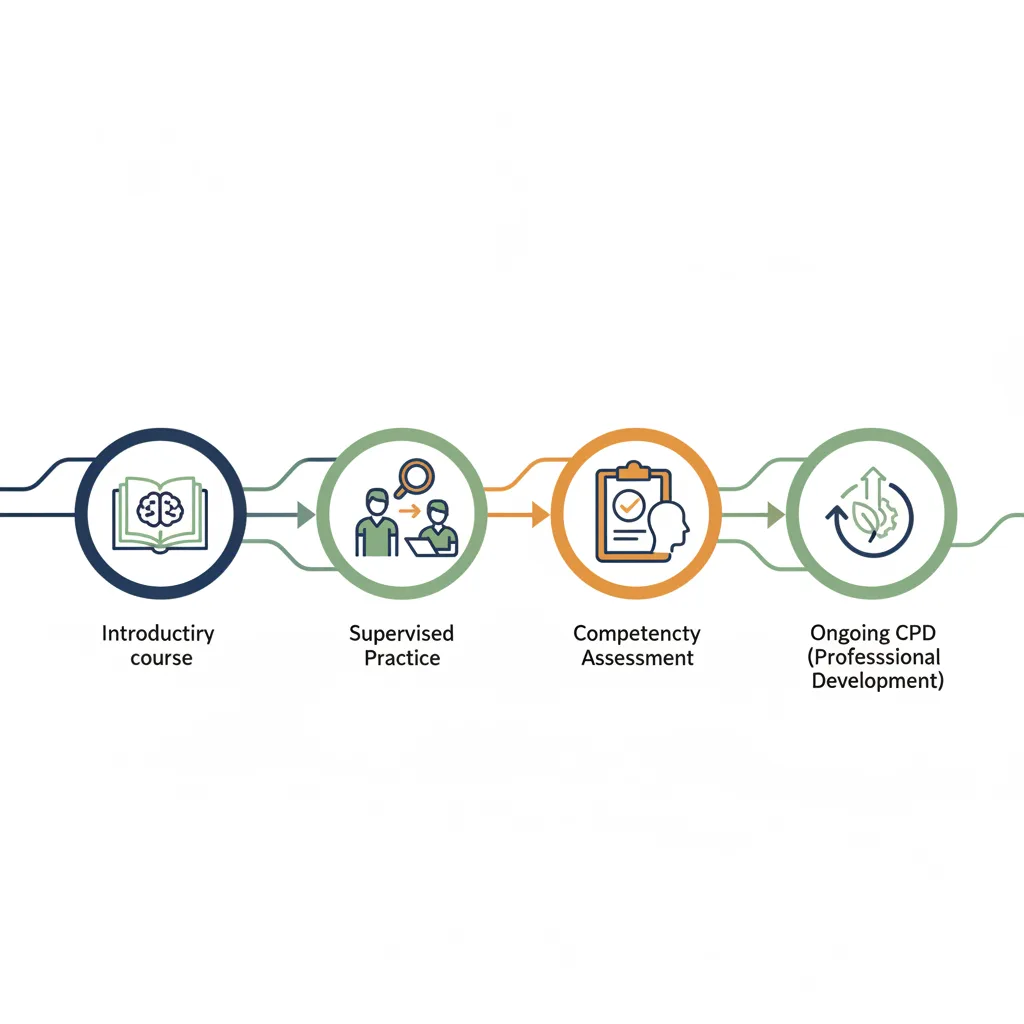
Each level requires a combination of online didactic learning, hands-on simulation training, and a specified number of supervised clinical scans with documented image quality assessment. The EMSSA ePOCUS credentialing guidelines are publicly available and describe the scan log requirements and assessment criteria for each level.
AIUM Practice Parameters
The American Institute for Ultrasound in Medicine (AIUM) publishes practice parameters for ultrasound examination across clinical applications. While American in origin, these parameters are widely referenced internationally and provide a useful framework for defining the minimum components of a diagnostic ultrasound examination. South African practitioners can use AIUM parameters as a quality benchmark even in the absence of locally published equivalents for some applications. AIUM practice parameters and guidelines are freely accessible on the AIUM website.
Credentialing Pathways
Credentialing for POCUS in South Africa is currently less formalised than in the United Kingdom (where the British Medical Ultrasound Society runs credentialing processes) or the United States (where multiple specialty societies issue POCUS credentials). In the South African context, credentialing typically operates at two levels:
Institutional Credentialing
Hospitals and health systems with formal POCUS programmes typically require practitioners to demonstrate completion of a recognised training programme and a minimum scan log before POCUS is included in their clinical privileges. If you work within an institution, check what credentialing process the clinical governance department expects before beginning to scan patients.
Self-Credentialing for Private Practitioners
Private practitioners without institutional oversight must effectively self-credential, which means documenting their own training, maintaining a scan log, and defining the scope of their POCUS practice in writing. This documentation becomes critical in any medico-legal inquiry. Keep certificates from training programmes, retain your scan log, and maintain a written scope of practice document.
Documentation Standards
Every POCUS examination performed for clinical purposes should be documented. The minimum documentation standard includes:
- Date and time of examination
- Indication: why was the scan performed?
- Views obtained: which anatomical windows were imaged?
- Findings: what was seen, including both positive findings and the absence of expected pathology
- Interpretation: how do the findings bear on the clinical question?
- Limitations: was image quality adequate? Were any views non-diagnostic?
- Clinical decision: what action did the POCUS finding prompt?
Image storage is important both for quality review and medico-legal purposes. Most wireless probe platforms include image storage within the device app, and some allow export to practice management systems. Establish a consistent image archiving workflow from the start of your POCUS programme.
Quality Review Processes
Individual practitioners and departments should implement some form of ongoing quality review. Options range from informal to formal depending on context:
- Regular case review: reviewing representative cases with stored images to assess image quality and interpretation accuracy
- Outcome tracking: documenting cases where POCUS findings were confirmed or contradicted by subsequent formal imaging or clinical outcome
- Peer review: occasional review of image sets by a more experienced POCUS practitioner
- Departmental audit: for institutional programmes, periodic audit of POCUS documentation completeness and clinical correlation
Medico-Legal Considerations
POCUS used within appropriate scope of practice, with adequate training and documentation, is a standard of care enhancer rather than a liability creator. The medico-legal risk lies in POCUS performed outside training, used to replace rather than supplement clinical assessment, or performed without documentation.
Key principles: POCUS is a clinical tool, not a radiological investigation. It does not produce a formal imaging report and should not be described as one. When POCUS findings are uncertain or non-diagnostic, formal radiology referral remains appropriate. The HPCSA's guidelines on scope of practice are the applicable framework for South African practitioners.
Building a Sustainable Programme
A sustainable POCUS programme is one where training is ongoing, quality review is regular, documentation is consistent, and scope of practice evolves as practitioner competence grows. It is not a one-time training event followed by years of unsupervised scanning.
Ultrascan's education resources include guidance on establishing documentation protocols, scan log templates, and referral pathways for formal training. Our resources page links to EMSSA training materials and relevant clinical guidelines. For institutional programmes, contact us to discuss how Ultrascan supports programme development in South African healthcare settings.
Visual Summary
Key concepts from this article at a glance.
Related Articles

Point-of-Care Ultrasound in South African Practice
How POCUS is transforming clinical practice across South Africa, from rural clinics to urban emergency departments.

Handheld Ultrasound in Private Practice: Lowering the Barrier
How wireless POCUS devices are making ultrasound accessible for private practitioners.

Handheld Ultrasound in Veterinary Practice
Exploring the growing role of portable ultrasound in small and large animal veterinary medicine.