

Handheld Ultrasound in Private Practice: Lowering the Barrier
Founder & Clinical Director, Ultrascan Technologies
March 17, 2026 - 7 min read
Private practice in South Africa has historically treated ultrasound as a radiology function. The patient presents, the GP or specialist examines them, and the clinical suspicion that warrants imaging generates a referral letter to a radiologist or sonographer. Days or weeks later, a formal report arrives. This model has been the norm for so long that many practitioners do not question it. But the financial and logistical case for bringing point-of-care ultrasound directly into a private consulting room has become compelling, and the barriers that once made this impractical have dropped significantly.
The Traditional Cost Barrier
For most of the past three decades, practice-based ultrasound meant a cart-based machine. Entry-level carts capable of abdominal and obstetric assessment started at R400,000 and climbed rapidly toward R1,000,000 for systems with adequate image quality and reliability. Above the hardware cost sat maintenance contracts, software upgrades, and the infrastructure requirements of a dedicated scanning room with appropriate electrical supply.
The business case required a practice to generate enough billable ultrasound studies to recover this capital outlay within a reasonable period. For high-volume OB/GYN practices or busy general radiology rooms, this worked. For a GP or specialist performing ten to twenty scans per month, the numbers rarely justified the investment.
How Wireless Changes the Calculation
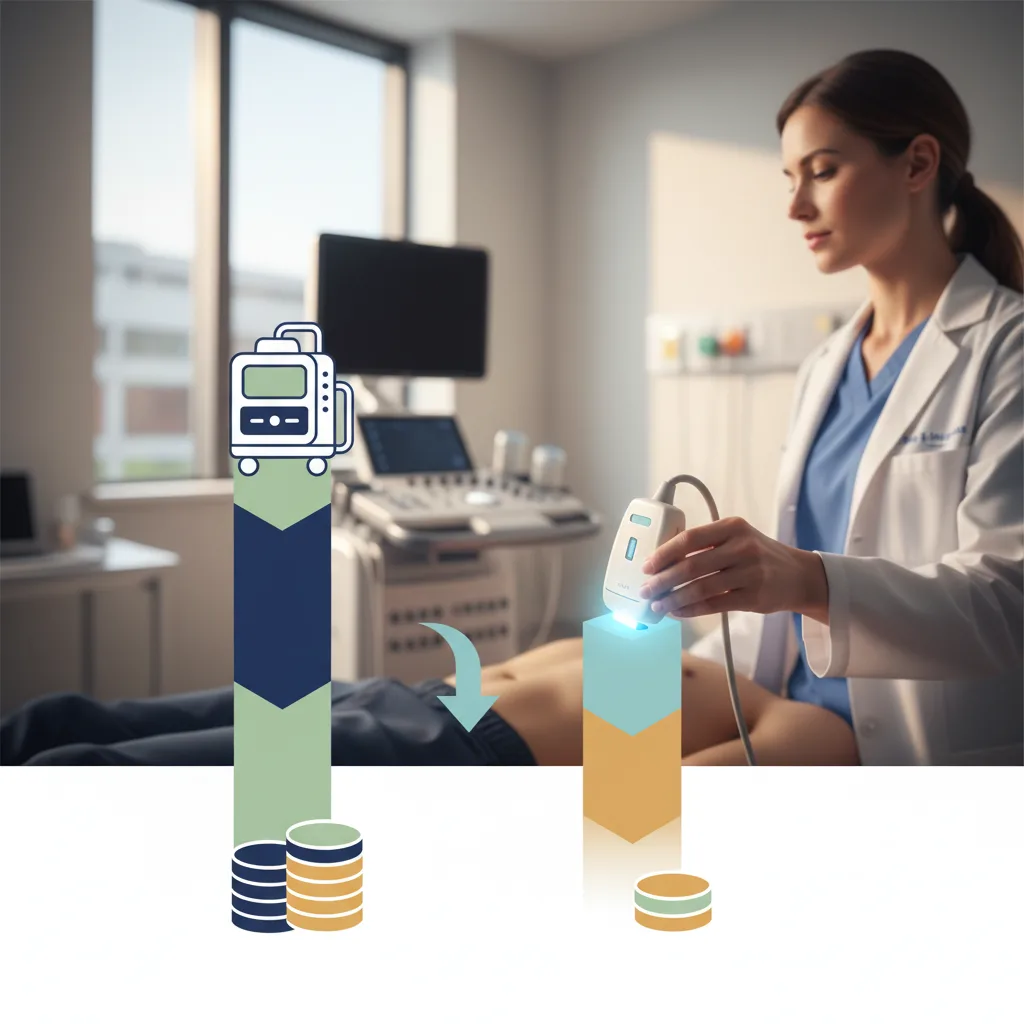
Wireless probes eliminate the largest cost elements of practice-based ultrasound: the cart hardware, the dedicated room, the maintenance contract, and the infrastructure requirements. A wireless probe sits in a drawer in the consulting room, connects to a smartphone or tablet in seconds, and delivers clinically adequate images for point-of-care assessment. The capital investment drops from R400,000 to R70,000 to R80,000 depending on the device selected.
The Ultrascan US-CL at R70,000 carries no annual subscription fee. The total five-year cost of ownership is the purchase price. No maintenance contract. No software renewal. No licence renewal. For a practitioner performing even a handful of billable scans per month, the break-even period is measured in weeks to months, not years.
ROI for South African Private Practitioners
Medical aid billing codes for bedside ultrasound vary by procedure and scheme. However, a realistic range for a procedure code covering a focused abdominal assessment or obstetric viability scan in a private practice context is R600 to R1,500 depending on the medical aid and the procedure. Some schemes recognise POCUS procedure codes in emergency medicine and anaesthesia settings that run higher.
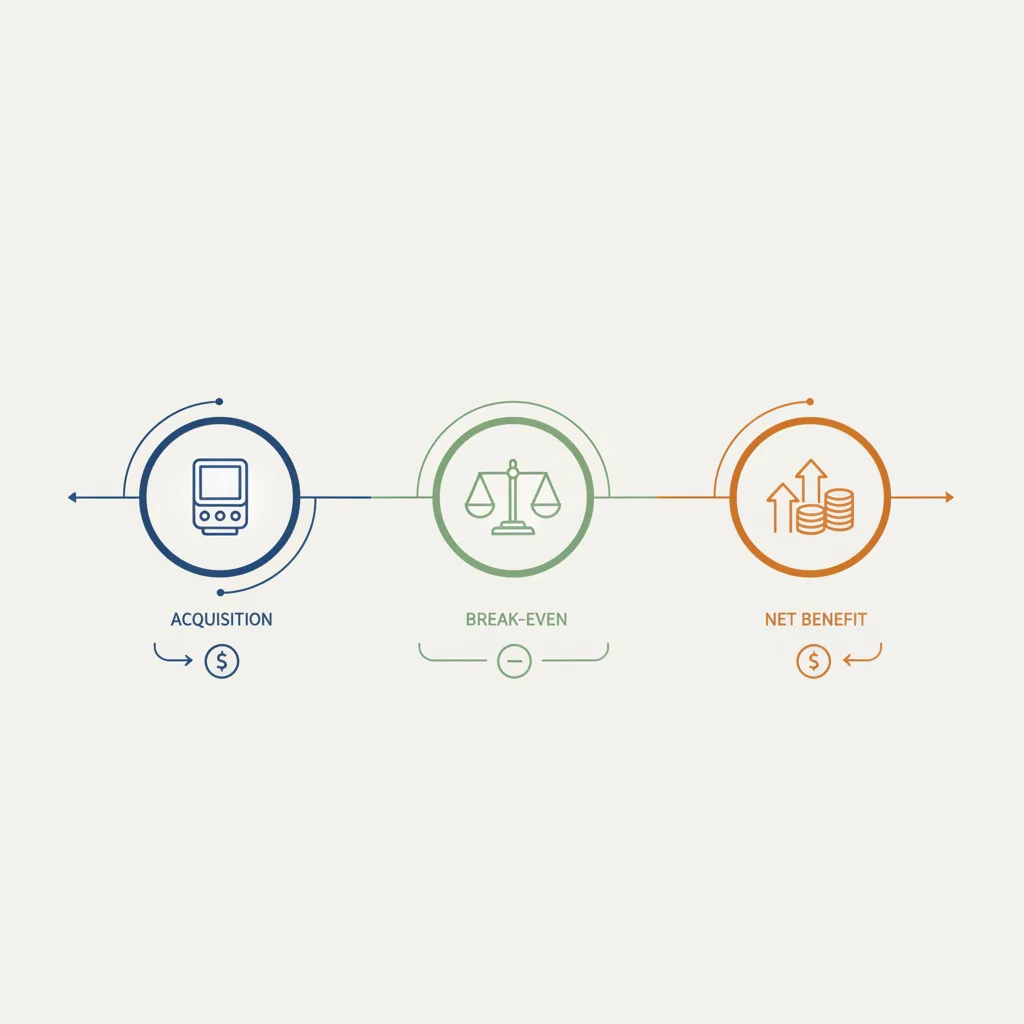
A conservative calculation: if a GP performs five additional billable assessments per week at an average of R800 per scan, that generates R4,000 per week, or approximately R192,000 per year in additional revenue. Against a R70,000 device cost with no ongoing fees, the break-even point arrives in roughly eighteen weeks. The remaining four-plus years of the device's useful life represent pure incremental margin.
These numbers do not account for the indirect revenue from reduced referrals (retaining patients in-practice rather than referring to radiologists) or the practice differentiation value of offering same-day diagnostic imaging, which is a genuine competitive advantage in many GP markets.
Section 11(e) Tax Treatment
South African tax law provides a meaningful incentive for private practitioners purchasing medical equipment through Section 11(e) of the Income Tax Act. Medical equipment used for income-generating purposes can be depreciated over its useful life, typically five years for most diagnostic equipment. This allows practitioners to deduct 20% of the device cost annually against taxable income.
At a marginal tax rate of 45% (the top personal income tax bracket under which many private practitioners fall), a R70,000 device generates annual deductions of R14,000 per year, reducing the effective after-tax cost over five years to approximately R38,500. The South African Revenue Service publishes guidance on wear-and-tear allowances for medical equipment. Consult your tax adviser or accountant to confirm the applicable rate for your specific equipment category and practice structure.
Medical Aid Billing Considerations
Medical aid billing for POCUS is evolving. Discovery Health, Bonitas, and Momentum Health have specific procedure codes for bedside ultrasound assessments. The codes applicable depend on your specialty designation and the specific procedure performed. Some schemes require pre-authorisation for certain ultrasound codes; others process them as routine procedure claims.
The Health Professions Council of South Africa (HPCSA) governs the scope of practice for ultrasound in medical settings. HPCSA guidelines on clinical practice and scope of practice are relevant for practitioners establishing POCUS billing within their specialty. The key principle is that POCUS billing should reflect a procedure performed within your scope of training and practice, with appropriate documentation.
Practical Integration Steps
For a private practitioner setting up POCUS in consulting practice, a practical integration sequence looks like this:
- Select a probe type appropriate for your clinical use cases (convex for abdominal and obstetric, linear for vascular access and superficial, dual-head for general practice)
- Complete a structured POCUS training programme before performing clinical scans (EMSSA ePOCUS or equivalent)
- Establish a documentation protocol for POCUS findings in your clinical record system
- Identify the applicable medical aid procedure codes with your practice manager or billing consultant
- Set a scope of practice limit: define which questions you will use POCUS to answer, and which will continue to require formal radiology referral
- Review your liability insurance to confirm POCUS is covered within your policy
Getting Started
For most private practitioners, the right starting point is a conversation about your specific clinical use cases, your billing profile, and your training pathway. Our team works with SA practitioners across general practice, specialist medicine, and allied health disciplines to match the right device to the right setting.
Visit our finance page for information on payment plans and financing options available for SA practitioners. The FAQ addresses common questions about billing, training requirements, and device selection. Or contact us directly through the contact page to speak with a member of the Ultrascan team.
Visual Summary
Key concepts from this article at a glance.
Related Products
Related Articles

Point-of-Care Ultrasound in South African Practice
How POCUS is transforming clinical practice across South Africa, from rural clinics to urban emergency departments.
POCUS Governance: Training, Documentation and Quality Assurance
Building a sustainable POCUS program with proper governance, training standards, and quality review.

Handheld Ultrasound in Veterinary Practice
Exploring the growing role of portable ultrasound in small and large animal veterinary medicine.