
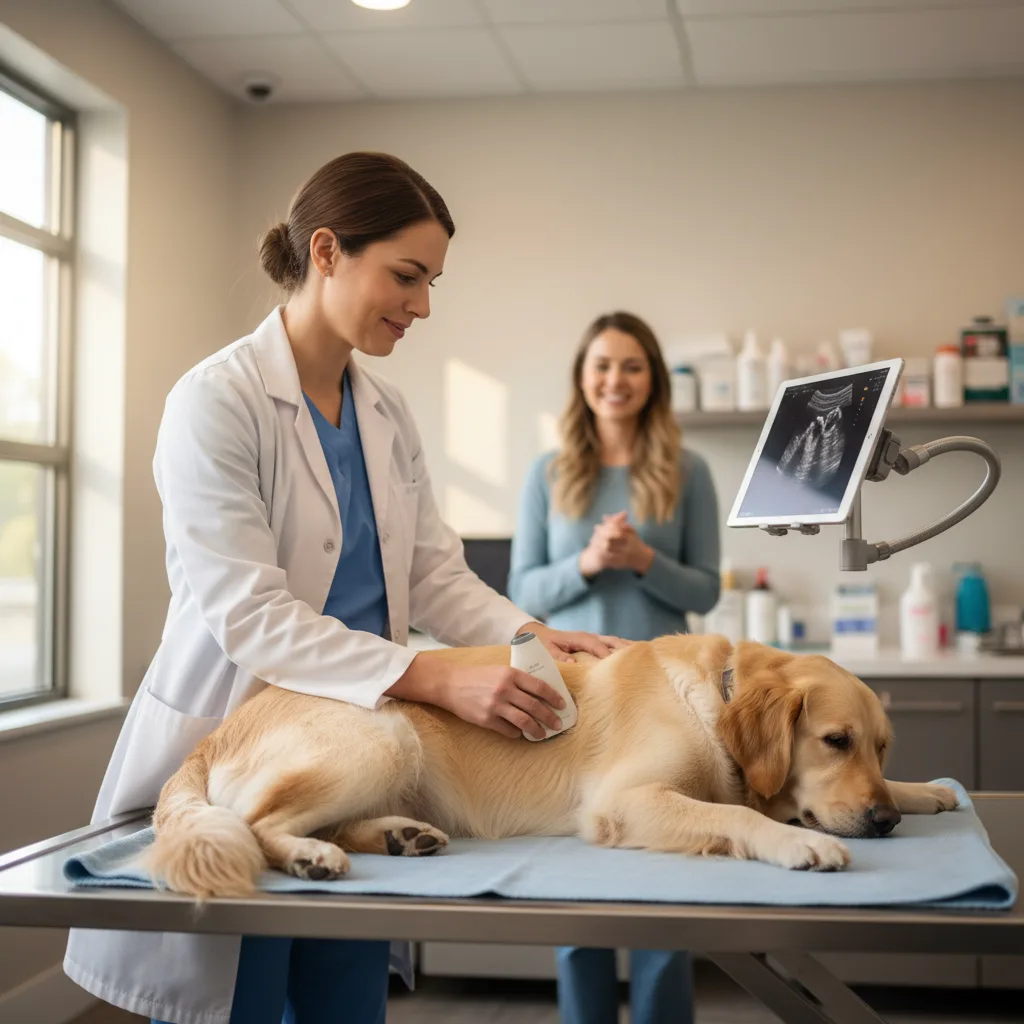
Handheld Ultrasound in Veterinary Practice
Founder & Clinical Director, Ultrascan Technologies
March 21, 2026 - 7 min read
Ultrasound has been used in veterinary medicine for decades, primarily in large-animal reproduction and small-animal abdominal assessment. Historically this required wheeled cart systems that stayed in the clinic. The emergence of wireless, handheld probes has changed the logistics of veterinary ultrasound significantly, bringing genuine diagnostic capability to the mobile large-animal practitioner in the field and reducing the capital barrier for small-animal clinics that previously could not justify a dedicated machine.
This article covers the key POCUS applications in veterinary medicine, the advantages of wireless probes in different veterinary contexts, and practical considerations for South African veterinary practitioners considering adding POCUS capability to their practice.
Small Animal Applications
TFAST and AFAST Protocols
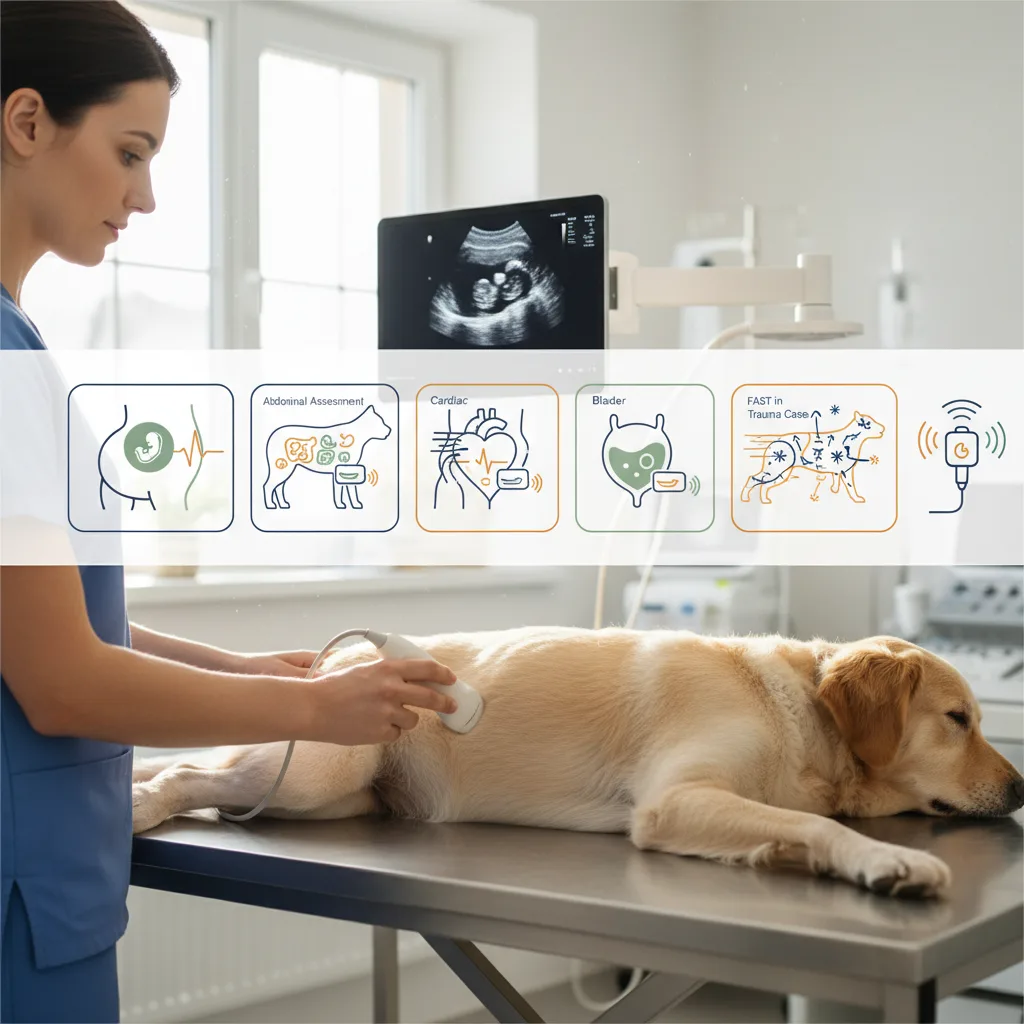
Veterinary POCUS has developed its own structured assessment protocols analogous to the human FAST examination. The Abdominal Focused Assessment with Sonography for Trauma (AFAST) and Thoracic Focused Assessment with Sonography in Trauma and Triage (TFAST) are now widely recognised in small-animal emergency medicine as first-line triage tools. These protocols use defined probe positions and acoustic windows to identify free fluid in body cavities, pericardial effusion, pneumothorax, and respiratory pathology.
In a dog or cat presenting in shock after a trauma event or with acute cardiovascular decompensation, TFAST and AFAST performed at the treatment table in under two minutes can identify life-threatening pathology and guide immediate intervention. The small convex probe footprint of a wireless handheld device is particularly well suited to the smaller acoustic windows available in small-animal patients, where a full-size cart transducer can be unwieldy.
Focused Cardiac Assessment
A focused cardiac assessment in small animals aims to answer binary clinical questions: is there a pericardial effusion? Is there significant cardiac chamber enlargement? Is myocardial contractility grossly reduced? These questions can be answered with a handheld probe by a trained veterinarian without full formal echocardiography. When a patient is too unstable for transport to a referral cardiology centre, point-of-care cardiac assessment can guide immediate management while formal specialist assessment is arranged.
Abdominal Assessment
Abdominal POCUS in small animals covers free fluid detection, bladder and urinary tract assessment, identification of obvious gastro-intestinal obstruction, and evaluation of major abdominal organs. A wireless convex probe allows the veterinarian to scan at the consultation table without moving the patient to a dedicated imaging room, reducing patient stress and accelerating clinical decision-making. Common emergency applications include confirming urinary obstruction, detecting haemoabdomen, and identifying gastric dilatation.
Large Animal Applications
Equine Practice
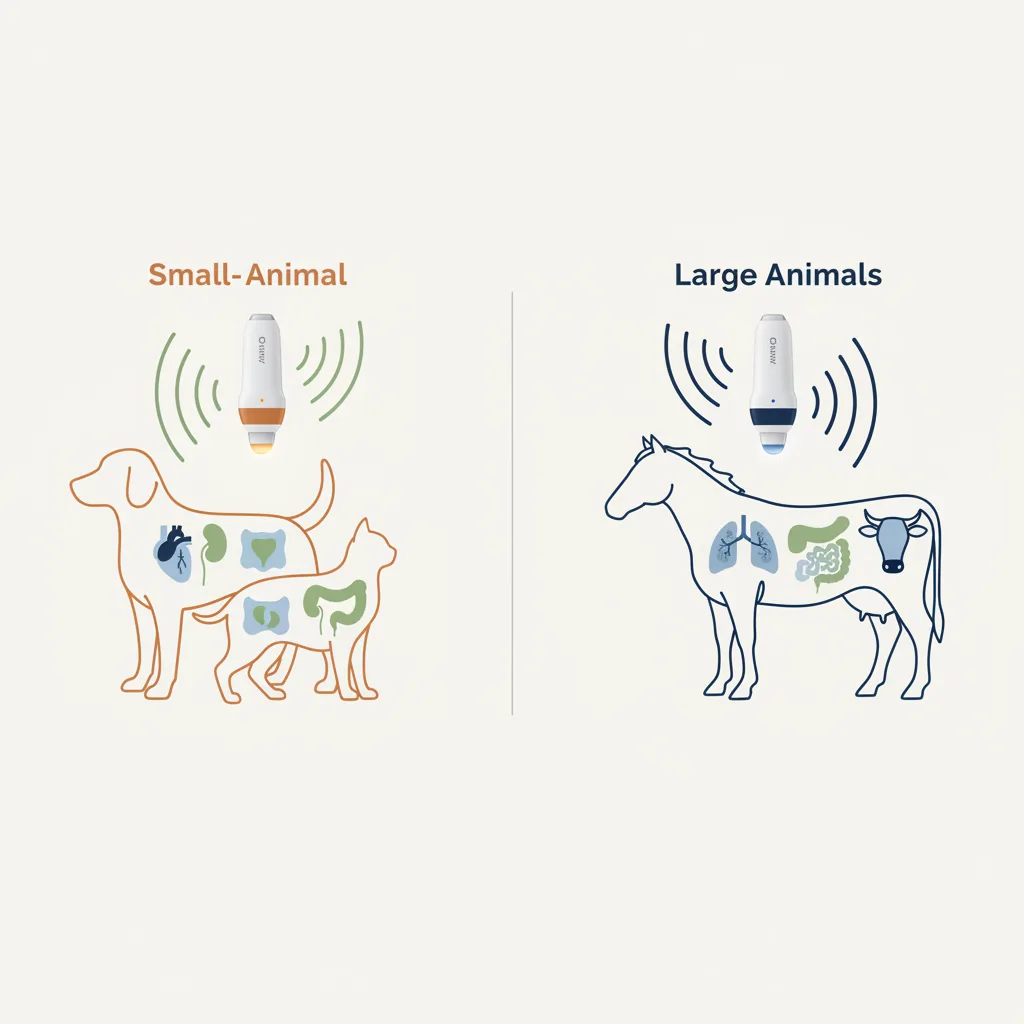
In equine medicine, ultrasound is essential for reproductive assessment (follicle monitoring, pregnancy diagnosis, uterine pathology), musculoskeletal injury assessment (tendon and ligament evaluation is a core equine sport medicine application), and thoracic assessment in respiratory disease. Equine practitioners working in the field, at stud farms, and at competition venues have always faced the logistical challenge of bringing imaging capability to the horse rather than bringing the horse to the clinic.
A wireless probe eliminates the need for a generator-powered cart in the field. The practitioner can perform reproductive scanning in the stable, assess a suspected suspensory ligament injury at the competition venue, or evaluate thoracic pathology in a horse too ill to transport, all with a probe that fits in a jacket pocket and connects to a smartphone. This represents a significant practical upgrade from both cart-based field units and the older portable rechargeable systems that were large and heavy by current standards.
The Ultrascan US-CL dual-head probe, with its convex and linear capability in one device, covers both reproductive/abdominal assessment and musculoskeletal work, making it a versatile choice for equine practitioners.
Bovine Practice
Bovine ultrasound applications include reproductive assessment (ovarian follicle monitoring, pregnancy diagnosis from 25 to 30 days post-conception), rumen assessment, evaluation of thoracic pathology in respiratory disease outbreaks, and assessment of the umbilical structures in neonatal calves. South African dairy and beef operations increasingly use ultrasound to improve reproductive efficiency and herd health management.
A wireless probe used through a rectal sleeve for transrectal reproductive scanning offers practical advantages: no trailing cable, no cart that needs to be positioned near the animal, and a probe that can be cleaned and disinfected easily between animals in a herd assessment scenario. Battery life is a relevant consideration for herd scanning sessions that may span multiple hours.
Advantages of Wireless Probes in Field Veterinary Work
- No trailing cable between probe and display: critical in large-animal work where the animal may move unexpectedly
- No generator or cart required for field use: the probe runs on internal battery and connects to a smartphone or tablet
- Fully portable in a standard vehicle without special equipment modifications
- Easy decontamination between patients: wireless probes with smooth housings can be cleaned with standard veterinary disinfectant protocols
- Image storage directly on the smartphone allows immediate client communication with scan screenshots
- Lower cost allows multiple practitioners in a group practice to each carry their own probe rather than sharing a single expensive cart
Cost Considerations for Veterinary Clinics
Veterinary clinic economics differ from human medical practice in important ways. Many veterinary clinics do not have the billing ecosystem of medical aids and procedure codes that human practitioners navigate. Revenue from ultrasound services depends on charging clients directly for the procedure, which requires that the cost of the equipment is recovered through procedure fees that clients will accept.
A wireless probe at R70,000 to R75,000 requires significantly fewer billable procedures to break even compared to a veterinary cart at R300,000 to R800,000. For a practice charging R500 to R1,500 per ultrasound examination depending on complexity and duration, break-even on a wireless probe occurs in a matter of weeks for an active practice. The Journal of the American Veterinary Medical Association has published on POCUS in veterinary emergency settings, and the VetFAST protocol and its clinical validation are documented in peer-reviewed veterinary literature.
Training for Veterinary POCUS
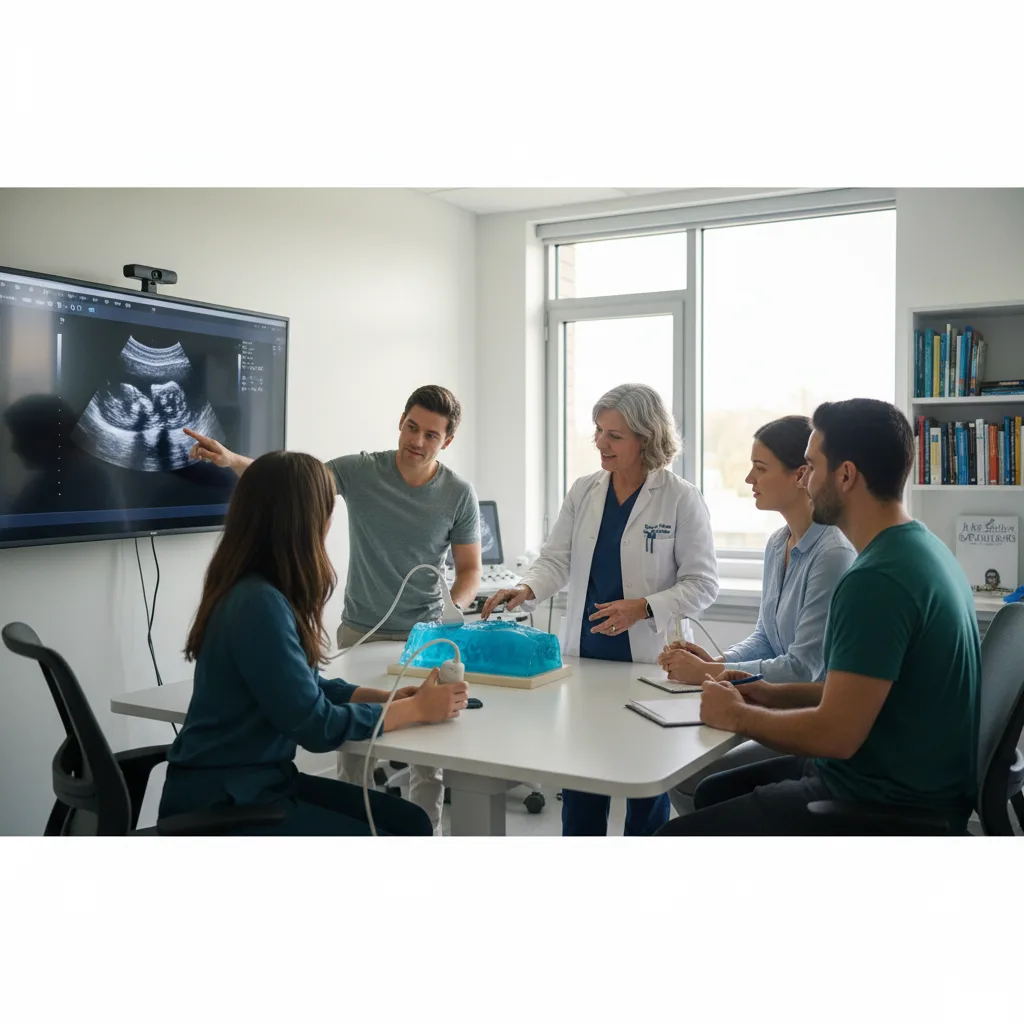
Veterinary POCUS training differs from human POCUS training in its acoustic windows and probe positioning, but the underlying principles of image acquisition, optimisation, and interpretation are shared. Some veterinary practitioners attend human POCUS courses and adapt the learning to veterinary anatomy, which is a valid approach for basic skills. Dedicated veterinary POCUS courses are available through veterinary specialist bodies and at major veterinary congresses.
For equine practitioners, reproductive ultrasound has been a standard training component in equine medicine curricula for many years. Extension to thoracic and musculoskeletal applications typically requires additional short-course training.
Choosing the Right Probe for Veterinary Use
For small-animal emergency and abdominal work, a convex probe is the primary tool. The Ultrascan US-CE convex probe covers abdominal and thoracic assessment in dogs and cats effectively. For practices that also perform vascular access, wound assessment, or musculoskeletal scanning, a dual convex-linear probe such as the Ultrascan US-CL adds linear capability without requiring a second device.
For large-animal practitioners, the same convex-linear dual probe serves reproductive and abdominal assessment alongside tendon and ligament evaluation. The wireless design is particularly valuable for field work with horses and cattle.
Contact our team through the contact page to discuss veterinary-specific probe selection, cleaning protocols, and training resources available for South African veterinary practitioners.
Visual Summary
Key concepts from this article at a glance.
Related Products
Related Articles

Point-of-Care Ultrasound in South African Practice
How POCUS is transforming clinical practice across South Africa, from rural clinics to urban emergency departments.

Handheld Ultrasound in Private Practice: Lowering the Barrier
How wireless POCUS devices are making ultrasound accessible for private practitioners.
POCUS Governance: Training, Documentation and Quality Assurance
Building a sustainable POCUS program with proper governance, training standards, and quality review.