
Ultrascan vs Butterfly Network: An Honest SA Comparison
Founder & Clinical Director, Ultrascan Technologies
March 25, 2026 - 12 min read
Choosing a wireless ultrasound probe in South Africa in 2026 means navigating a market where international brands command premium prices, local support is uneven, and annual subscription costs can quietly double your three-year spend. Butterfly Network and Ultrascan are two of the most frequently compared platforms in this space. This article gives you an honest, numbers-first breakdown so you can make the right call for your clinical setting, your budget, and your workflow.
The Devices at a Glance
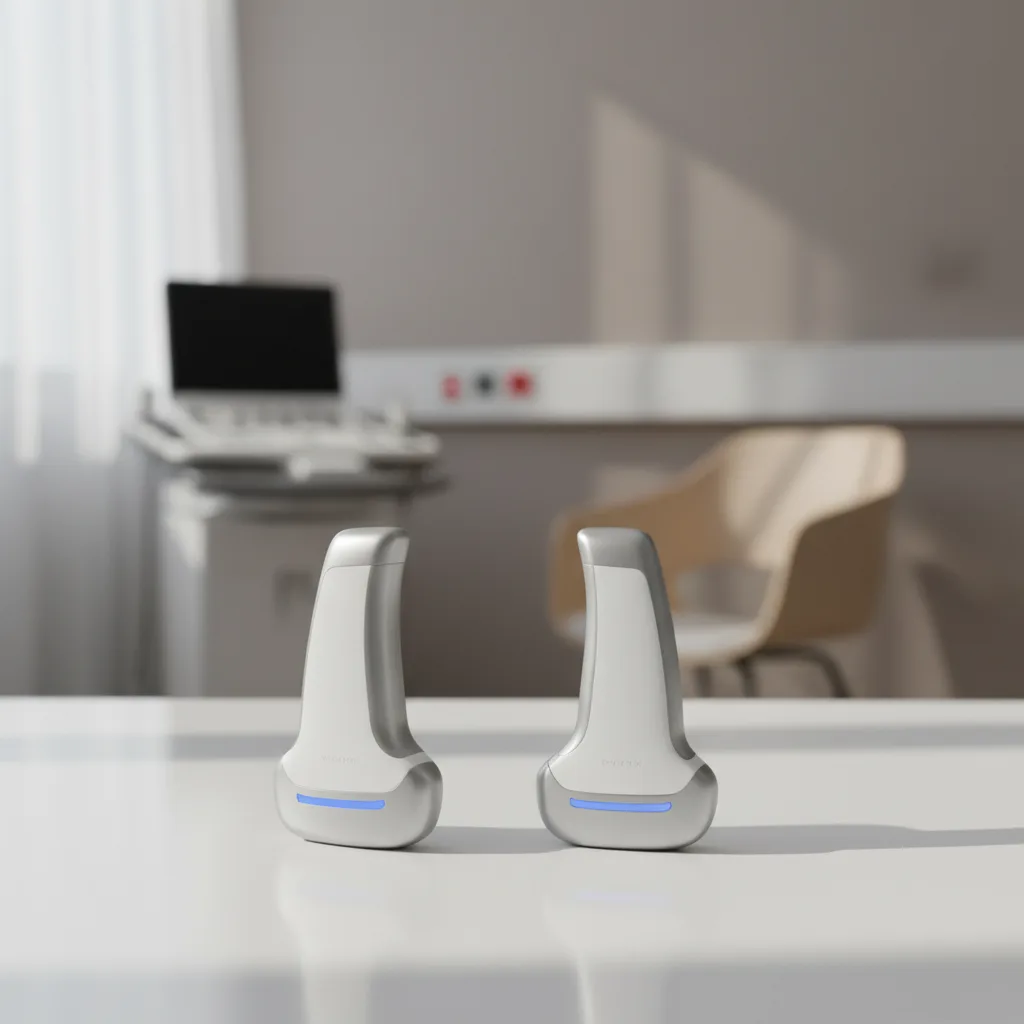
Butterfly Network produces two current consumer-facing probes: the iQ+ and the newer iQ3. Both use a single silicon chip to produce multiple transducer frequencies in one probe body, giving clinicians access to superficial and deep imaging from a single device. Ultrascan offers a range of probes covering different clinical applications, from the dual-head US-CL all-rounder to the cardiac-optimised US-PL phased array and the premium US-CL Pro.
Both platforms connect wirelessly to a smartphone or tablet. Both are SAHPRA-registered for use in South Africa. Both target clinicians who want bedside imaging without a cart.
Price Comparison in ZAR
Price is where the comparison becomes most concrete. Here are current indicative ZAR figures as of early 2026. International pricing fluctuates with the rand, so treat these as directional rather than fixed:
- Ultrascan US-CL (dual-head all-rounder): R70,000 - no annual subscription
- Ultrascan US-CL Pro (premium clarity): R80,000 - no annual subscription
- Ultrascan US-PL (phased array / cardiac): R75,000 - no annual subscription
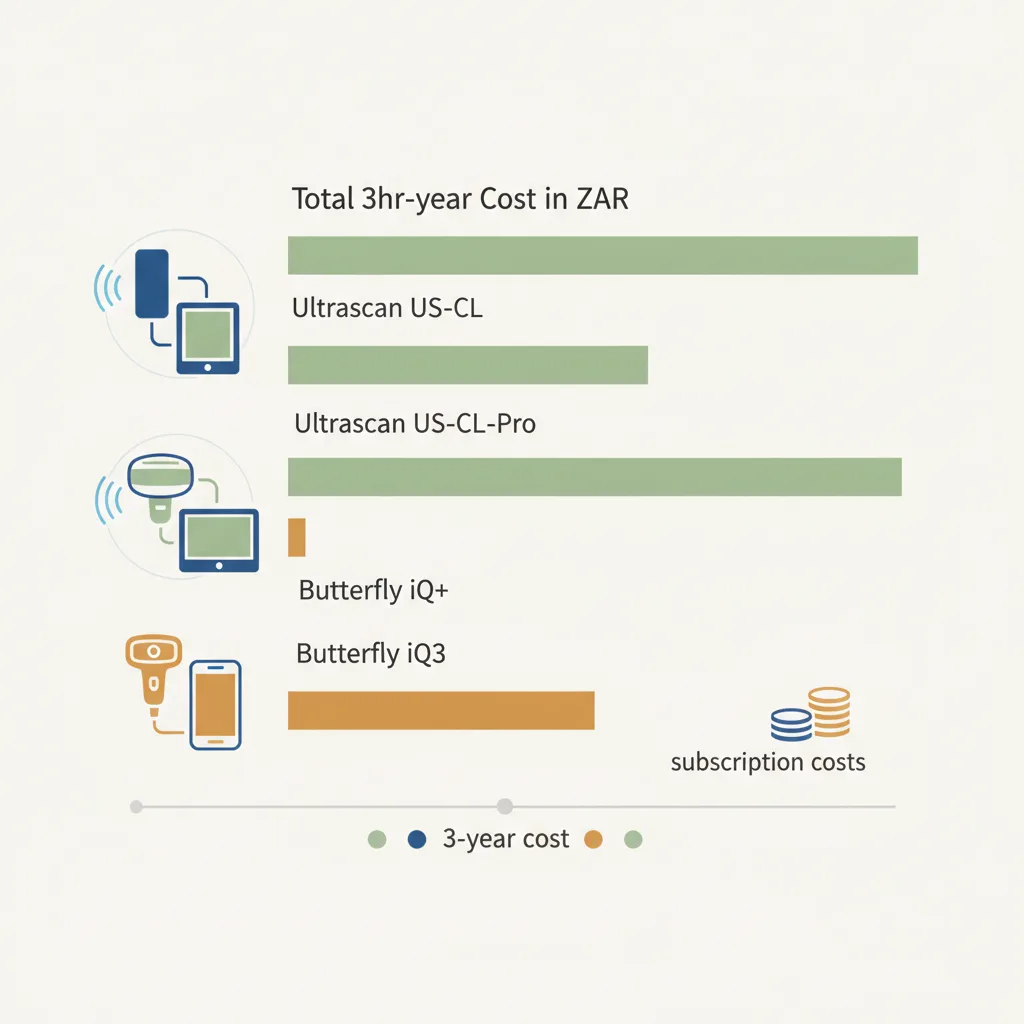
- Butterfly iQ+ (single chip, all-purpose): R49,932 plus R5,532 per year subscription
- Butterfly iQ3 (upgraded chip, broader bandwidth): R72,132 plus R5,532 per year subscription
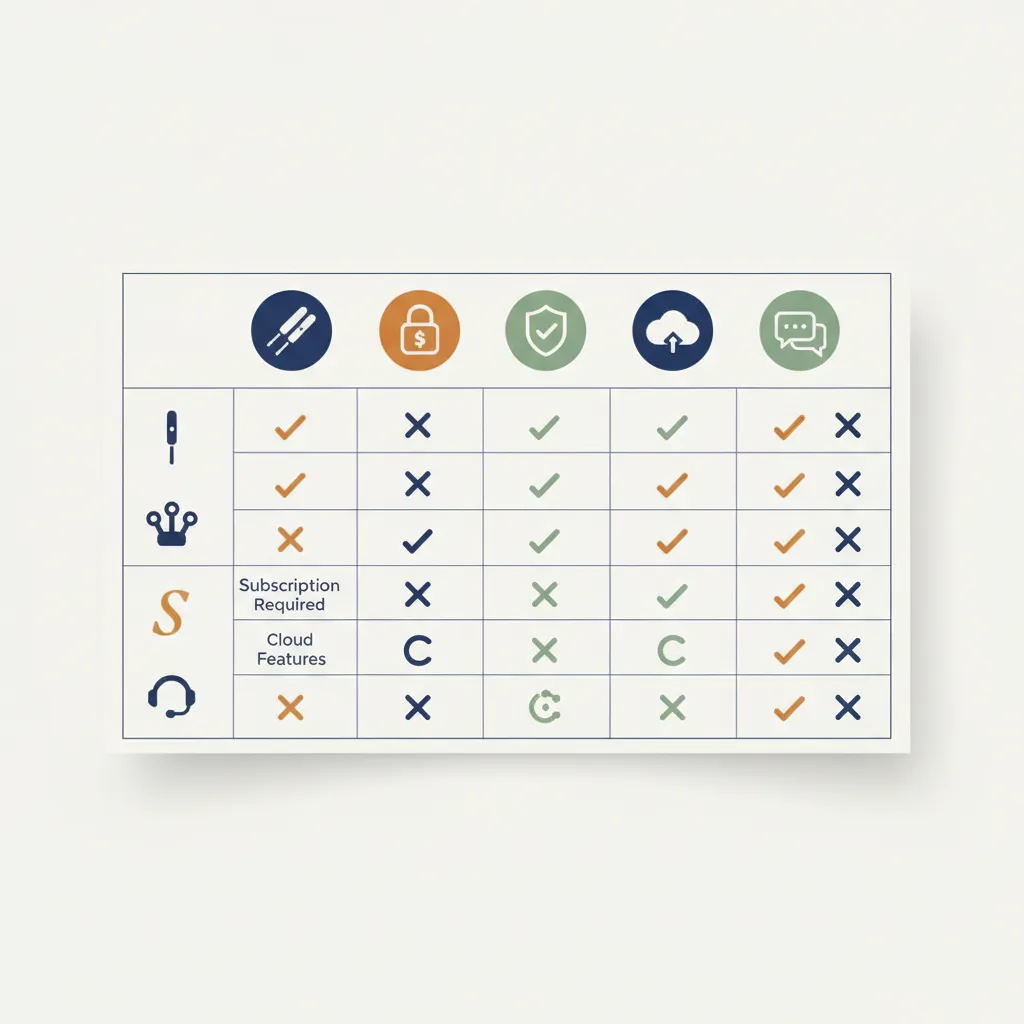
The subscription point deserves emphasis. Butterfly's cloud-based platform requires an active subscription to unlock the full feature set, including AI annotations, cloud image storage, and multi-device account sync. Without a subscription, the iQ+ and iQ3 still function as imaging devices, but several workflow features are restricted. For a single clinician over three years, that adds R16,596 (iQ+) or R16,596 (iQ3) to the total cost of ownership before accounting for any price changes.
Ultrascan devices carry no subscription. Imaging, measurement tools, and image storage on the device work without any recurring fee. If your practice budget is constrained or you simply prefer a known fixed spend, this matters.
To learn more about how financing options work for SA practitioners, visit the Ultrascan finance page.
Three-Year Total Cost of Ownership
When you factor in the subscription costs over a realistic device lifespan, the gap widens considerably:
- Ultrascan US-CL Pro over 3 years: R80,000
- Butterfly iQ+ over 3 years: R49,932 + R16,596 = R66,528
- Butterfly iQ3 over 3 years: R72,132 + R16,596 = R88,728
A group practice sharing one iQ3 across multiple users might justify the subscription cost differently if the cloud workflow genuinely changes how they manage images. For a solo practitioner in private practice, the subscription is a recurring cost that provides cloud features they may not heavily use.
Image Quality: What the Evidence Shows
Both platforms produce clinically adequate image quality for point-of-care applications. The Butterfly chip-based architecture is engineered differently from conventional piezoelectric transducer arrays, and early studies noted image quality gaps compared to traditional probes. More recent iterations of the Butterfly hardware have narrowed this gap considerably.
A systematic review published in the Journal of the American Society of Echocardiography found that handheld ultrasound devices perform comparably to standard echocardiography for detecting left ventricular dysfunction, pericardial effusion, and significant valvular pathology when operated by trained users. The key variable was operator training, not brand.
For an evidence base on handheld device diagnostic accuracy, see this PubMed meta-analysis on handheld ultrasound diagnostic performance.
The Ultrascan US-CL Pro is specifically positioned as a high-clarity device with image processing optimised for confident diagnosis. For users who find image interpretation challenging on entry-level handhelds, the step up to the Pro tier is worth evaluating. You can compare it directly at the US-CL Pro product page.
Probe Type Coverage
Butterfly's single-chip architecture means one probe covers a wide frequency range from approximately 1 MHz to 10 MHz, enabling both abdominal and superficial applications. This is genuinely convenient for a clinician who wants one device for everything. The trade-off is that purpose-built probes often outperform all-in-one designs in their specific application.
Ultrascan takes a targeted-probe approach:
- US-CL: Dual-head convex and linear - abdominal and procedural guidance
- US-PL: Phased array and linear - cardiac, vascular, and nerve blocks
- US-CE: Convex and endocavitary - OB/GYN and abdominal
If you primarily work in one specialty, a targeted Ultrascan probe may deliver better image quality for your specific use cases than a broadband all-in-one device.
App Ecosystem and AI Features: Where Butterfly Leads
This is where an honest comparison must acknowledge Butterfly's genuine strengths. The Butterfly app ecosystem is more mature. Butterfly Garden, their online learning community, offers structured POCUS education integrated with the device. Their AI-assisted features, including automated cardiac measurements and needle guidance overlays, are well-developed and regularly updated.
Butterfly's cloud architecture also means images sync automatically across devices, which matters for team-based workflows where multiple clinicians access the same patient images. This is a real differentiator for group practices with the budget to support it.
Butterfly's published technical specifications can be reviewed on their Butterfly iQ3 product page.
Ultrascan's app is functional and clean, but the AI annotation layer is less developed. For clinicians who want AI prompts to guide their interpretation, Butterfly currently offers more in that category.
South African Support and Warranty
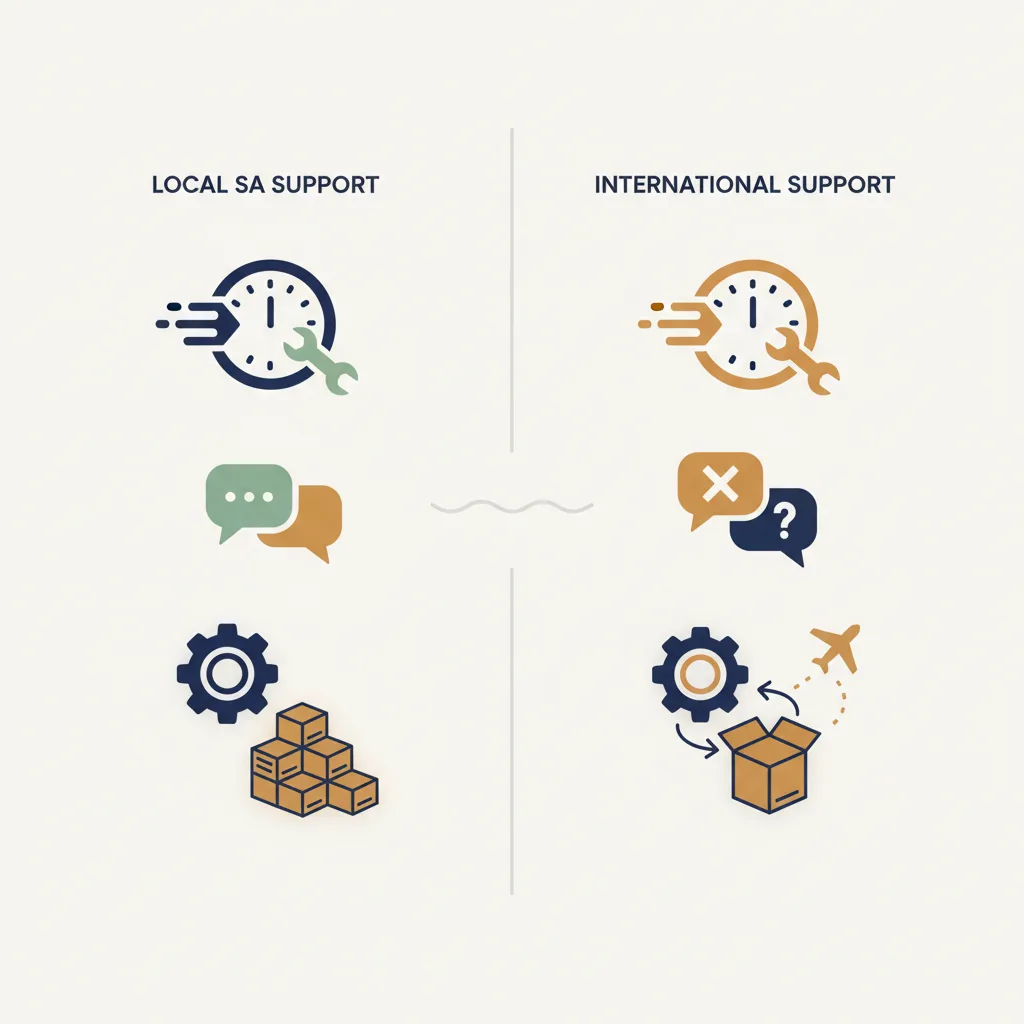
This is a decisive factor that international comparison articles typically gloss over. Butterfly Network is an American company. South African purchases of Butterfly devices go through a distributor network, and warranty claims, repairs, and technical support involve international logistics. If a probe malfunctions, you are waiting for courier turnaround across borders.
Ultrascan is based in South Africa. Support calls reach a local team. Warranty claims are handled locally. Training is available in-person. For clinicians outside major urban centres, where shipping to international service centres means weeks without a device, local support is not a minor consideration.
If you want to discuss support specifically for your setting, contact the Ultrascan team directly.
Regulatory Status
Both Butterfly and Ultrascan devices are SAHPRA-registered for use in South Africa. Both carry CE marking and FDA clearance. From a regulatory compliance standpoint, neither platform has a meaningful advantage for SA-based practitioners.
Who Should Choose Which
Choose Butterfly iQ3 if: you work in a well-funded group practice that will actively use the cloud workflow and AI features, you value the most mature app ecosystem available, budget allows for both the device cost and ongoing subscription, and you have reliable technical support through your distributor.
Choose Ultrascan if: you want a known, fixed cost with no recurring subscription, you operate in a setting where local support matters, you want a probe optimised for your specific specialty (cardiac, procedural, OB), or you are comparing devices for a practice where total cost of ownership over three to five years is the primary constraint.
For most South African private practitioners and hospital departments working within budget constraints, the combination of no subscription, local warranty support, and SA-registered devices makes Ultrascan the lower-risk choice. The Butterfly ecosystem is genuinely strong, but it commands a premium that may not deliver proportional value in every clinical context.
Browse the full Ultrascan range at US-CL and US-PL, or explore your finance options to understand how to structure the purchase.
Visual Summary
Key concepts from this article at a glance.
Related Products
Related Articles

Point-of-Care Ultrasound in South African Practice
How POCUS is transforming clinical practice across South Africa, from rural clinics to urban emergency departments.
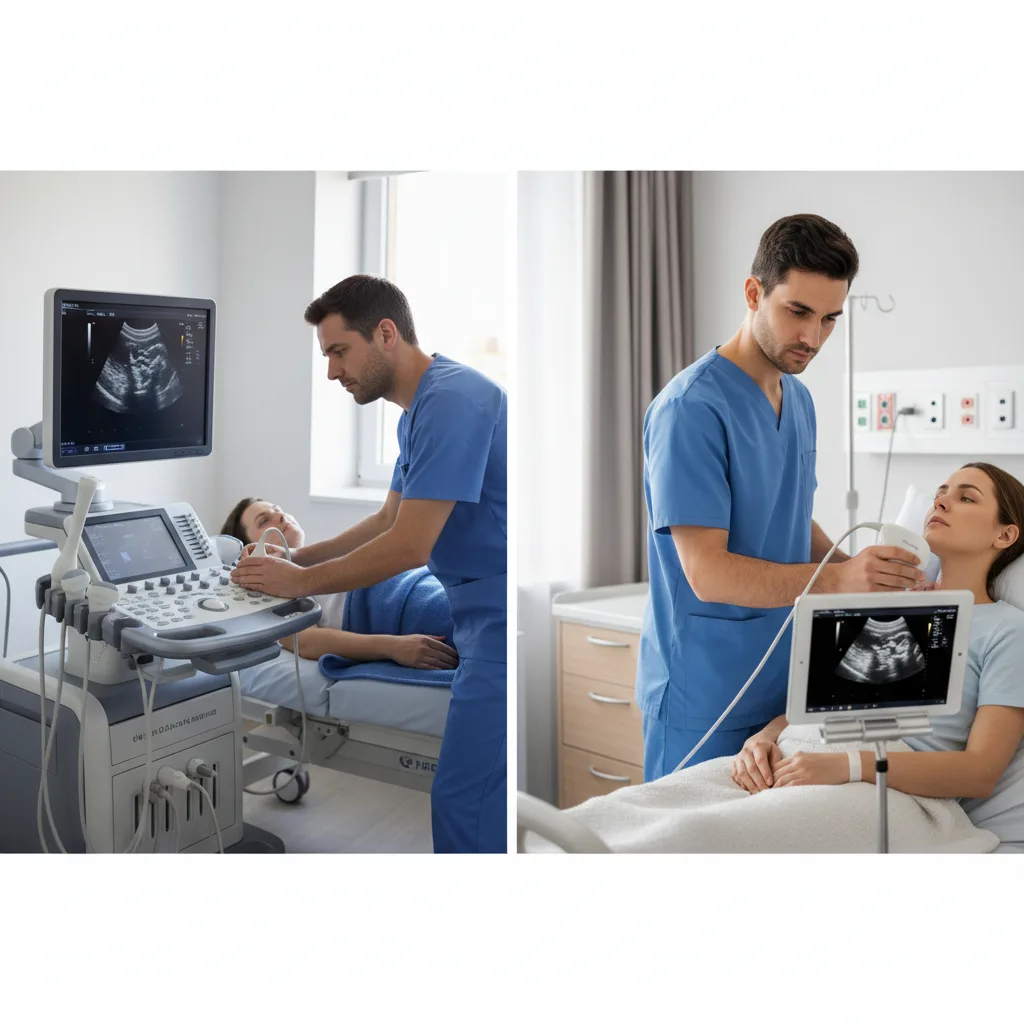
Handheld vs Cart-Based Ultrasound: An Honest Comparison
A balanced look at where handheld ultrasound excels and where cart-based systems remain stronger.
Ultrascan vs Clarius: Which Wireless Probe is Right for You?
A detailed comparison of Ultrascan and Clarius wireless ultrasound probes for SA practitioners.