
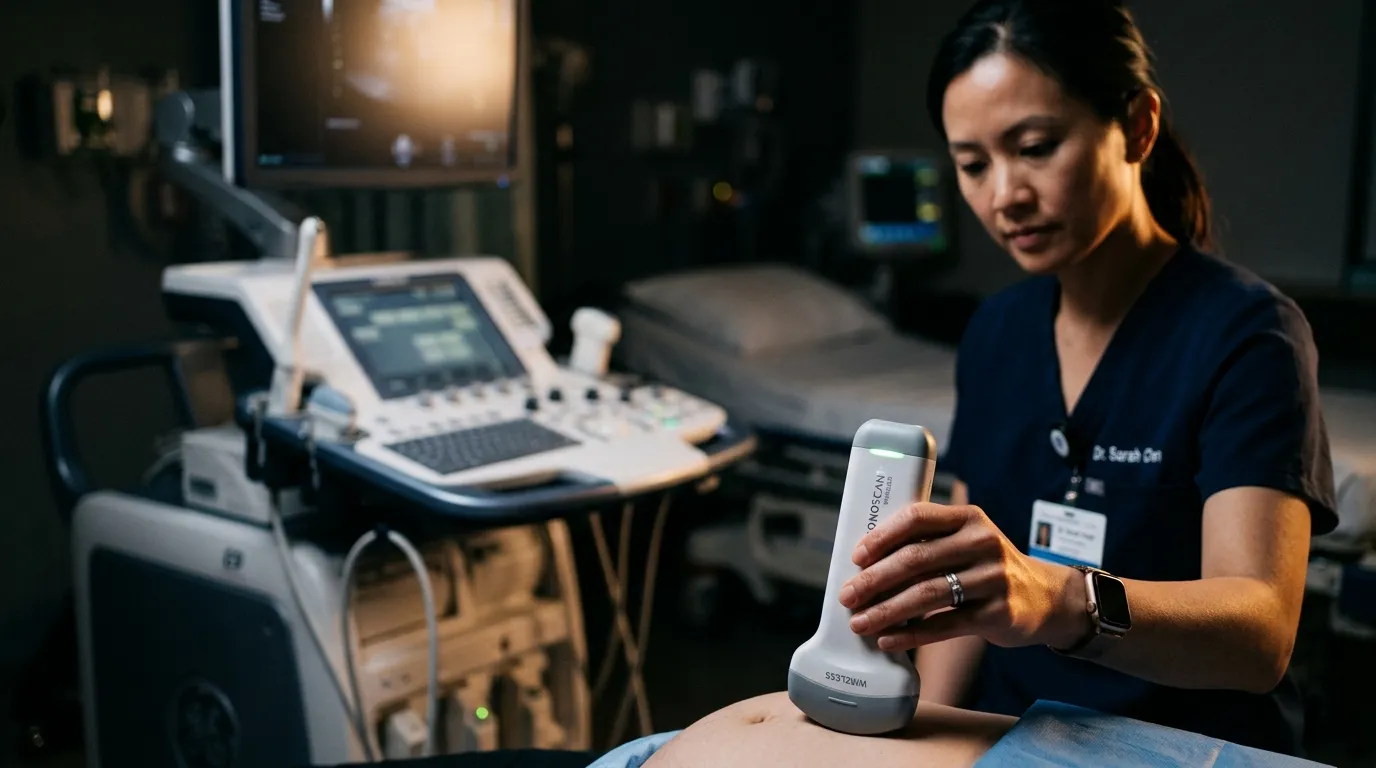
Handheld vs Cart-Based Ultrasound
Overview
Choosing between a handheld wireless probe and a traditional cart-based system depends on your clinical environment, workflow requirements, and budget. This guide objectively compares image quality, portability, application suitability, and total cost of ownership to help clinicians make an informed decision.
Key Clinical Points
Handheld probes deliver diagnostic-quality images for the vast majority of POCUS applications
Cart systems retain advantages for high-volume formal echocardiography and obstetric reporting
Wireless probes require no dedicated space and operate in any clinical environment
Total cost of ownership for handheld devices is typically 5-10x lower than cart systems
Battery life of 3+ hours covers a full clinical shift for most POCUS workflows
Software updates continuously improve handheld probe performance over time
Related Specialties
Ready to put this into practice?
Book a free hands-on POCUS demonstration with Dr. Docrat at your practice.
Book a Free Demo